
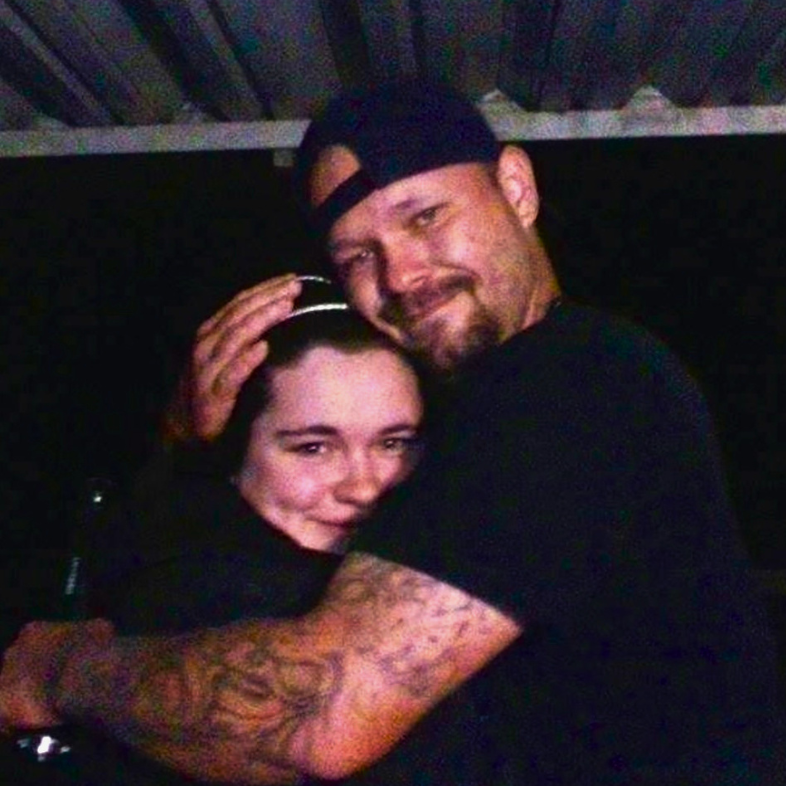
Story told by Michael’s loving sister, Luana
My brother, Michael Linscott, was the baby of seven children. To me, he was not just my brother. He was a hero.
On October 3, Michael went to the emergency department because he was having trouble breathing. Before that, we noticed that he was not talking right. His speech sounded garbled, and he did not feel well. When his breathing became difficult, we knew he needed medical care.
Michael sat in the waiting room for more than two hours before he was finally called back. Once he was brought back, he was given breathing treatments and medication. At one point, he was given Dilaudid, and his oxygen levels dropped into the 70s. He was given Narcan, but nothing changed. About 20 minutes later, he was given another dose, and still nothing changed. Then a code blue was called. Michael was resuscitated and placed on a ventilator.
I flew from Maryland to California to be with him. When I saw him and began asking questions, I felt that this was not the right place for him. He was intubated, and I felt he was not receiving the care he needed. His sheets had not been changed in more than a week. When I asked why, I was told, “He’s a big guy. I can’t lift him.” I tried to move him myself, but they would not let me. I was told that if I moved him, he could die, and it would be on my hands.
A few days later, Michael’s blood platelets were 14, which is extremely low, and he needed blood transfusions. No one was explaining to me what was happening. I had to get his medical records to understand more. While he was receiving blood transfusions, he had a serious reaction. We still do not know exactly what caused it.
Each day passed, and no one asked if it could be sepsis.
Michael went into the hospital on October 3. On October 13, which would have been his birthday, I received a call from the doctor telling me that his kidneys were failing. When my family and I arrived at his bedside, he was burning up. He had been running a high fever for a week, and the doctor told me he did not know what was wrong with him.
The next day, October 14, 2025, the doctor told me he thought Michael’s port or central line might be the source of an infection, so they changed the lines. I am not sure exactly when they found MRSA in his nose. That was also the day the doctor finally called and told me Michael had sepsis. His breathing was getting worse, and the ventilator had gone from 50% to 70%.
The next morning, on October 15, I received the call that his breathing had gone from 70% to 100%. The ventilator was doing all of the breathing for him.
My family and I went to the hospital. The doctor walked up to me and stood there for a few minutes while my family cried and became upset. Then he turned to me and said, “Your brother is in septic shock, and he will die today.”
I knew it was bad. I could see by the way Michael looked that he was not going to walk out of there. But I was still shocked to hear those words.
Losing him was one of the worst things our family has ever experienced. We were torn apart. We lost the baby of our family, and within 30 days, we lost another younger brother, who ended his life because the grief and pain were too much for him to carry.
I wish I had advocated even harder, although I was doing everything I could. Michael left me to be the one to make decisions, and I did. But I felt the hospital did not listen when I asked to have him moved to another hospital, a bigger one that was better equipped and had more doctors with more knowledge.
After Michael died, my family, friends, and I protested for several weeks in front of the hospital, asking for answers. Many people came forward afterward, saying they had also lost loved ones after care at the same hospital.
I believe things could have been different if Michael had been treated for sepsis sooner. He had symptoms, and I feel they were missed until it was too late.
My message to others is this: take better care of yourself. Any time you feel off, or something does not seem right, go now. Do not wait. Ask about sepsis. Demand blood work. Do not let testing be delayed. If you feel doctors are not listening or are dragging their feet, speak up, keep asking questions, and stand your ground.
Getting to the right hospital matters. With sepsis, time is not on your side.
Ask questions. Stand your ground. This is a life.
